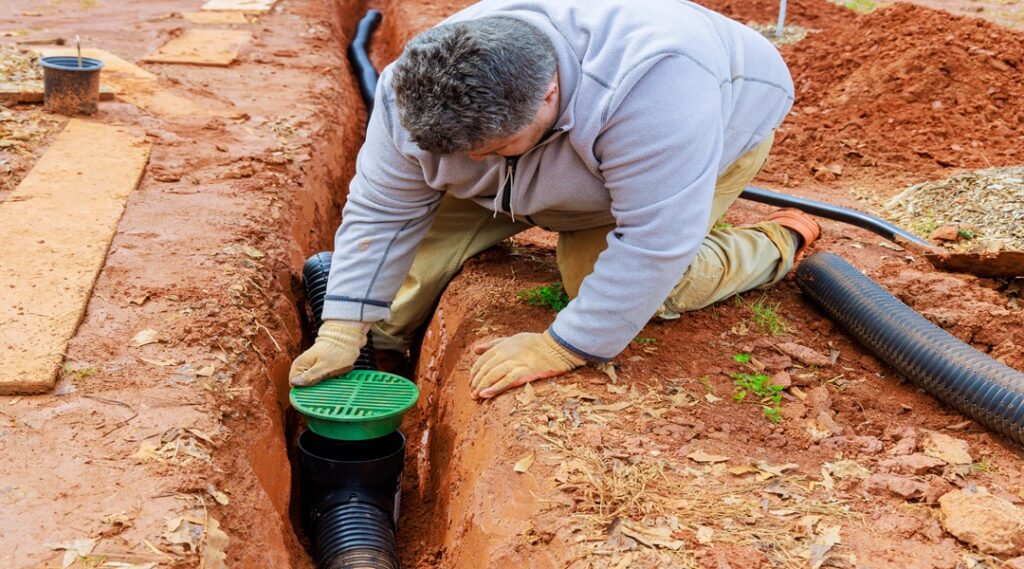

When considering outdoor drainage solutions, understanding the difference between a French drain and regular drain proves vital. A French drain features a gravel-filled trench with a perforated pipe wrapped in fabric to filter water underground. In contrast, standard drains involve open ditches or pipes that remove surface water directly.
The intricacies of their design reflect distinct functions. With one blending into the landscape while the other often remains visible. Choosing between them involves analyzing soil conditions, desired aesthetics, and specific water management needs.
French Drain Design Explained
Understanding the nuances of a French drain system is essential. This subsurface drainage strategy employs a gravel-filled trench, harnessing both perforated pipes and permeable fabric to ward off soil and root interference after digging its home beneath the earth’s surface. Unlike their above-ground counterpart, trench drains.
French drains operate discreetly below ground level. Gravel acts as an initial filter for incoming water in these systems. At the same time, the strategically laid pipe whisks it away from trouble spots like flooded lawns or soggy foundations where stability could be at risk. Their design prowess even handles hydrostatic pressure with aplomb.
An invisible shield against groundwater’s relentless push. For those considering french drain installation, know that assessment of land space and anticipated water volume will dictate your project scale. A meticulous excavation marks just the beginning of this reliable defense against erosion’s grip and nature’s untamed elements.
Regular Drain Fundamentals
Regular drains, often known as trench drains, present a contrast to French drains with their above-ground configuration. Constructed within long trenches in the ground, these systems are marked by grates resembling guttering and serve efficiently in residential settings for diverting water away from potentially harmful or erosive areas. Trench drains shuttle excess moisture towards storm sewers or natural water bodies while maintaining ecological balance.
Their design affords adaptability. They can be temporary or everlasting fixtures tailored to blend into specific landscapes through varying grate designs and strengths. They resist displacement under pressure due to robust materials and surface visibility.
This is an advantage over subsurface options like the French drain, which may clog due to soil infiltration unless protected by landscaping textiles. Designed for easy access maintenance without disturbing underground lines when installed correctly. These benefits justify consulting professionals before implementation since unguided excavation might disrupt subterranean utilities or alter hydrological patterns unfavorably.
Installation Variations French vs. Regular
Installing French drains and trench drains requires contrasting approaches due to their disparate operational mechanisms. Trench drain installations involve creating a surface-level channel lined with concrete, sloped for water flow optimization, then shielded by metal grates. An essential measure to thwart debris-induced clogs.
Notably incorporated are features like debris chutes or heavy-duty cast iron compliant with ASTM standards which bolster durability. Conversely, constructing a French drain entails excavating an underground trench—placement of the perforated pipe is paramount as holes must face downward ensuring effective water ingress from below. Lining it with filter fabric prevents contamination while surrounding gravel facilitates drainage before covering back up with soil maintaining property aesthetics yet enabling moisture sequestration away from critical structures.
Regular maintenance checks are vital since such systems can be prone to blockage without them. In essence: hardy fixtures define trench; subsurface precision defines French installation methods. Each tailored distinctly towards either visible hardscape bounds or unseen softscape vulnerability management underfoot.
A French drain differs from a regular one because it’s covered and relies on gravity to move water. It sits below ground, hidden by gravel. Traditional drains are often open or can connect to sewage systems for wastewater removal.
The French system is more about managing groundwater and preventing soggy yards or basements, not disposing of household waste. Each serves unique purposes in controlling water flow around homes and landscapes but with distinct designs suited to different challenges posed by excess water.